Inaugural Lecture: How Democracies Know: Personhood, Population, and the Politics of Numbers in Ghana
Join us for Associate Professor Alena Thiel's Inaugural lecture at CAS. The lecture will be followed by a reception.
Abstract
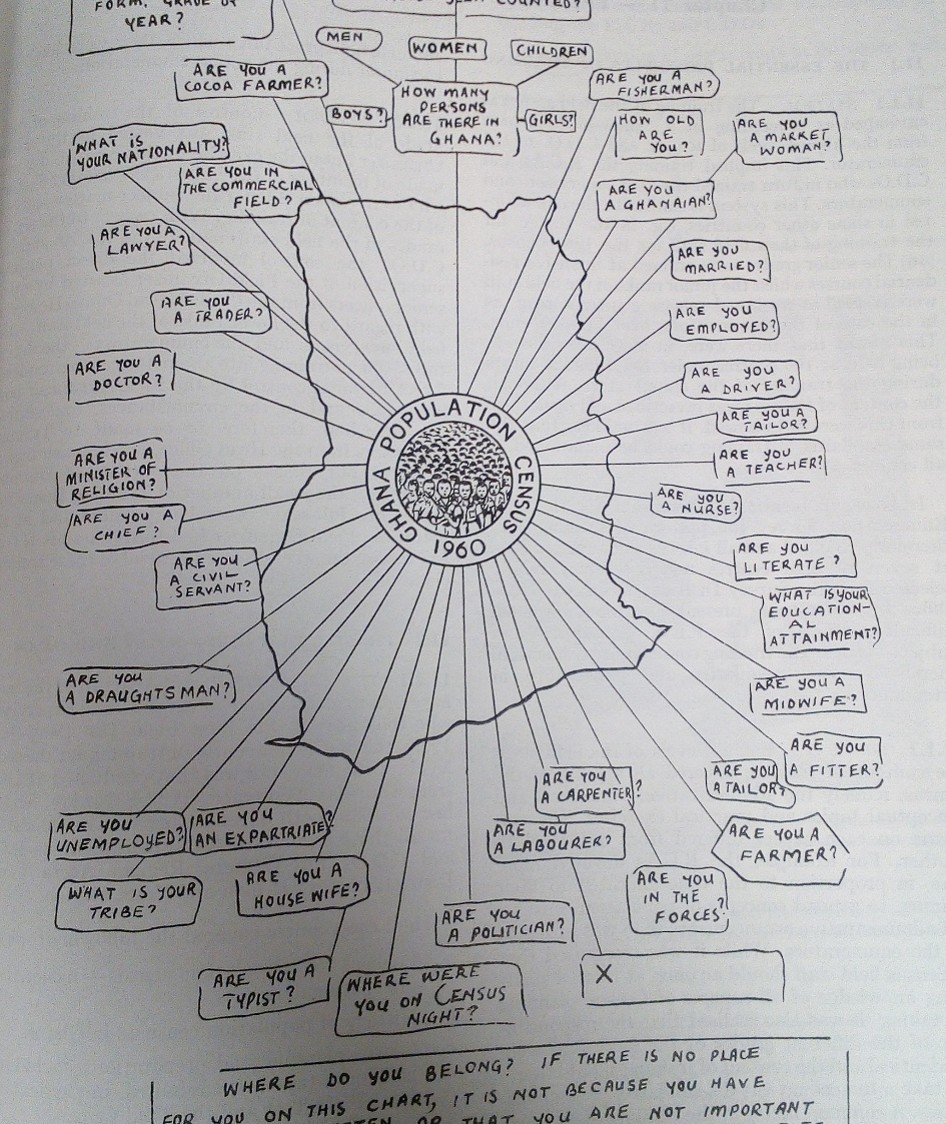
The social study of state bureaucracies remains a vibrant field, with James Scott’s Seeing Like a State central to debates on how states render complex life-worlds legible through quantification. Among them, sociologists of quantification examine the world-making power of official statistics and the “new politics of numbers” that results from contemporary public sector digitalization (Mennicken & Salais 2022). Despite this wealth of theoretical knowledge, African statistical and population registration systems remain routinely framed in reductive terms of data poverty, incompleteness and unreliability.
In this inaugural lecture, Alena Thiel's aim is to reflect on the last eight years of ethnographic work in Ghana’s key statistical institutions to propose a conceptual move towards a decidedly Africanist socio-history of statistical and population registration systems as they emerge as critical ordering technologies of our time.
The lecture is structured around four temporal metaphors – genealogies, fixing, acceleration and anticipation – that provide analytical entry points into emerging population data systems and their performative, world-making character. Genealogies, here, relate to the historically grown classifications that over time “sediment” into the very “bedrock” of society (Didier 2020). Temporal fixing refers to the individualization of a person through inscription in a state register, most prominently in the moment of birth or identity registration. Acceleration, in turn, describes the promise of digital technologies to speed up interventions, opening thus new modalities of interaction between states and their datafied citizens. Anticipation, finally, signals the increasing enrolment of experts in anticipatory regimes (Adams et al. 2009), which through their imposition of future-oriented perspectives on care and control, enact the future as a pressing site of intervention in the present.
In connecting across these metaphors, Alena Thiel proposes an African Studies perspective that positions itself against the totalizing temporality of techno-science and quantitative measurement, to illustrate how various heterochronicities cut across the techno-scientific commitment to acceleration and reductionism.
Alena Thiel is Associate Professor at the Centre of African Studies, University Copenhagen where she leads the ERC Starting Grant “ModelFutures”. She recently completed the Marie Skłodowska-Curie project “Managing Uncertainty in Disaster Risk Reduction” (MUNDI). Together with Samuel Ntewusu, she published “The Social Life of Health Data: Health Records and Knowledge Production in Ghana”.