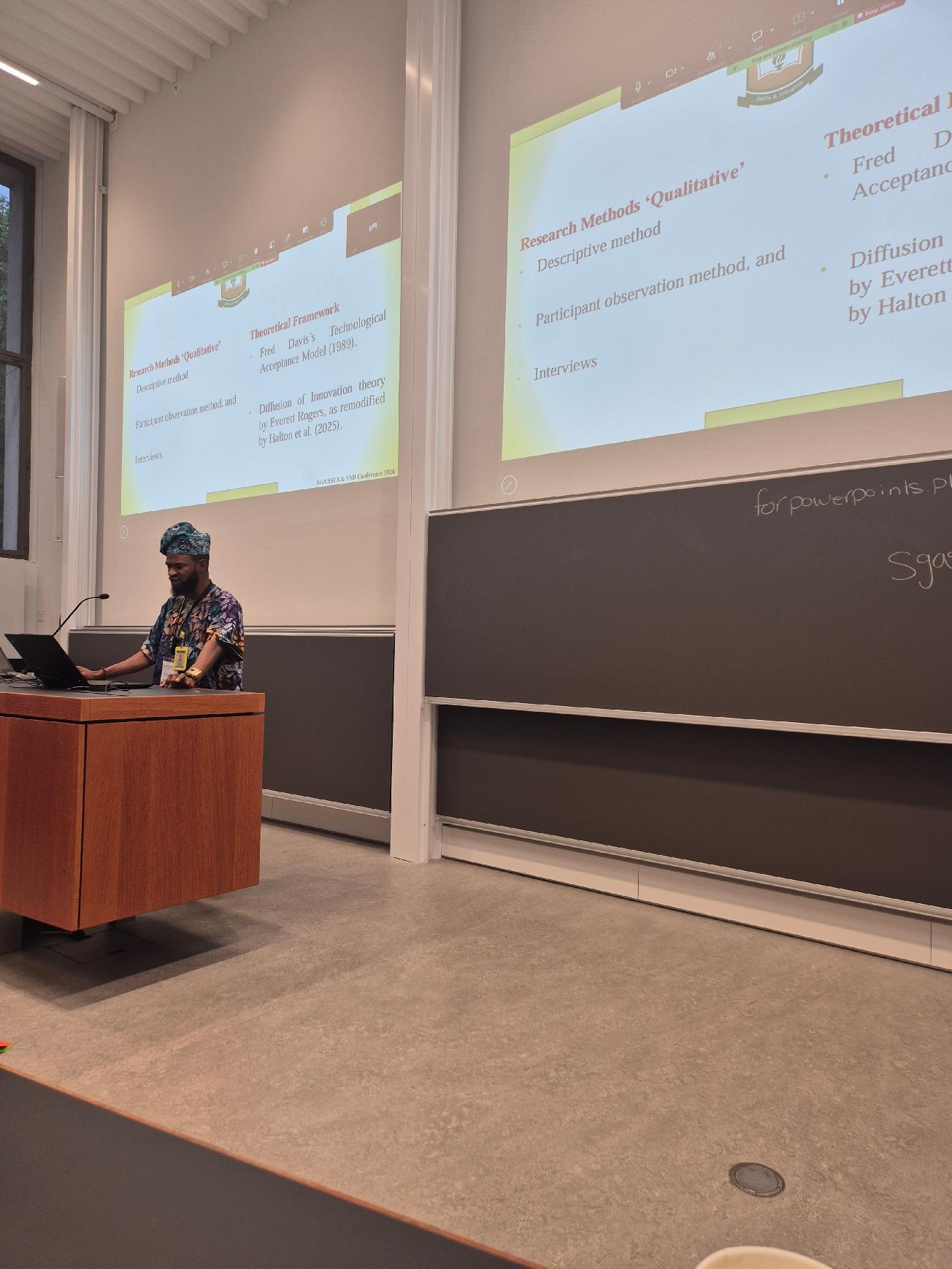
CAS Postdoc Edwin Ambani Ameso convenes panel on African Agency in Platform and AI Futures
In late August Edwin Ambani Ameso, ModelFutures postdoc convened a panel at the 2026 conference “African Perspectives on Global Transformations” in Basel, Switzerland, held by Swiss Society for African Studies (SGAS) and the Association for African Studies in Germany e.V. (VAD). The panel Ameso co-convened with Dr. Gift Mwonzora and co-moderated with Hanna Tesfaye from Erfurt University, Germany, took the conference´s framing into infrastructure with a focus on “Digitalization, Labour, and Governance: African Agency in Platform and AI Futures”, keeping a central focus on: what do we actually mean when we say African agency?
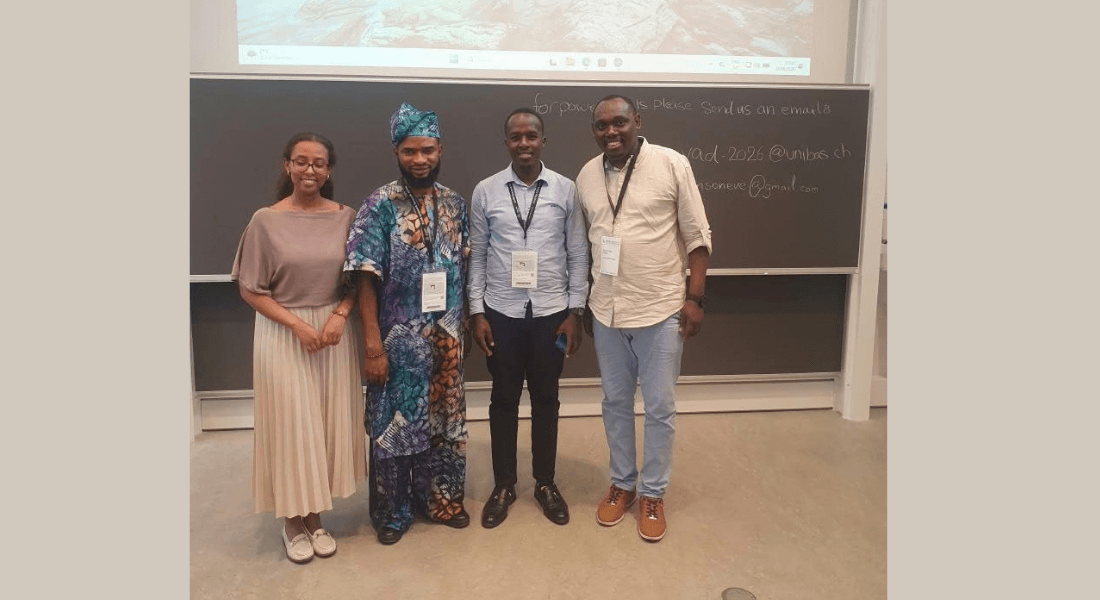
Edwin’s contribution:
Three senses of agency emerged, first was agency as negotiation inside infrastructures built elsewhere. From showcasing how pedagogical sovereignty emerges as the education sector adapts AI learning platforms to local languages and curricula rather simply being passive receipts. Showcasing how the stage and film industry utilise AI as an artistic collaborator rather than a threat. To showcasing how regional animation studios rebuild production pipelines on their own terms. Participants (Irvin Kitol, Musiliyu Olorunnishola Sanni and Japheth Isaboke and Oluwarotimi Randle). Second, agency as brokerage showcases how the ethnography of mobile money is a reminder that digital infrastructures run on people. Intermediaries holding systems together absorb the risk of fraud and carry the relational work that makes trust possible in a monetary system structurally exposed to it. Third, agency as a claim that must be made, not assumed. Where (Jayshree Mallaya and Erwin Coleman) the burden of inclusion often obscures, the cognitive tax of repeated verification, fragmented services and opaque decisions, and how gendered they are.
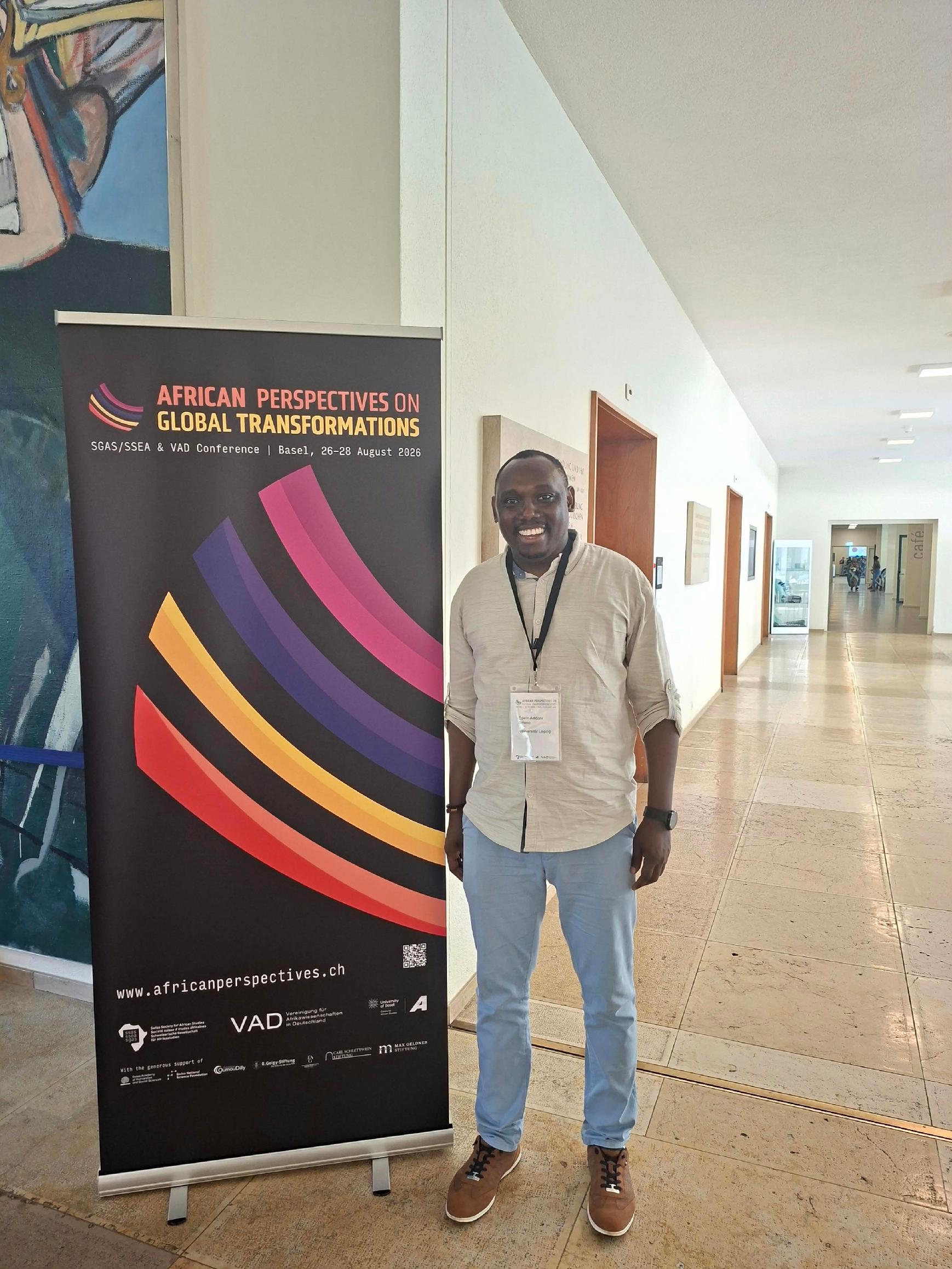
What I took away
The conference asks about restitution of what was taken and now sits in Euro-American museums. Our panel raised the same question in a tense that has not closed: data, models and creative work are being extracted and capitalised now, under legal regimes that have no place to register the claim. Restitution and extraction are not only historical categories, but epistemic justice is the thread running underneath. Pedagogical sovereignty, authorship, and the right to be legible to a system without paying a cognitive tax for the privilege are all claims about whose knowledge and whose presence count. Additionally, agency is not the opposite of constraint. Rather the lens through which individuals act skilfully inside arrangements they did not design and cannot easily exit. Celebrating the skill without naming the constraint would be a poor reading of this evidence.
Where I would like to take this
If planetary health is the conceptual header, then the portals, registries and claims systems are where it either arrives or stalls. My own take is asymmetries that I have largely observed through my empirical studies with an extended reliance on intermediaries never counted as infrastructures. Second, this is also the terrain of ModelFutures, the ERC starting grant project where tracing of how digital and data infrastructures are reconfiguring public administration and social protection across Botswana, Senegal, Ghana and Kenya is the focus. I would like to take the following questions going forward: How do we move from strong single cases to comparative claims about who bears the costs of digitalisation? What institutional designs would treat care as a structural principle rather than an afterthought? And how do we link platform-level dynamics to household livelihoods and public goods, where these systems either deliver or fail?
Thank you to all six presenters, to Dr Gift Mwonzora for co-convening and discussing, to Hanne Tesfaye from the University of Erfurt, whose work as student assistant kept both sessions running smoothly, and to the ZASB team in Basel. Conversations very much to be continued.