
PlastiCITIES: New project will research changing waste work in urban Kenya
How are efforts to tackle plastic pollution changing the lives of those who make a living from waste in Kenya? Researchers at the Centre of African Studies at the University of Copenhagen, in partnership with researchers at Kenyatta University and Busara in Nairobi, will be exploring this question over the next five years.
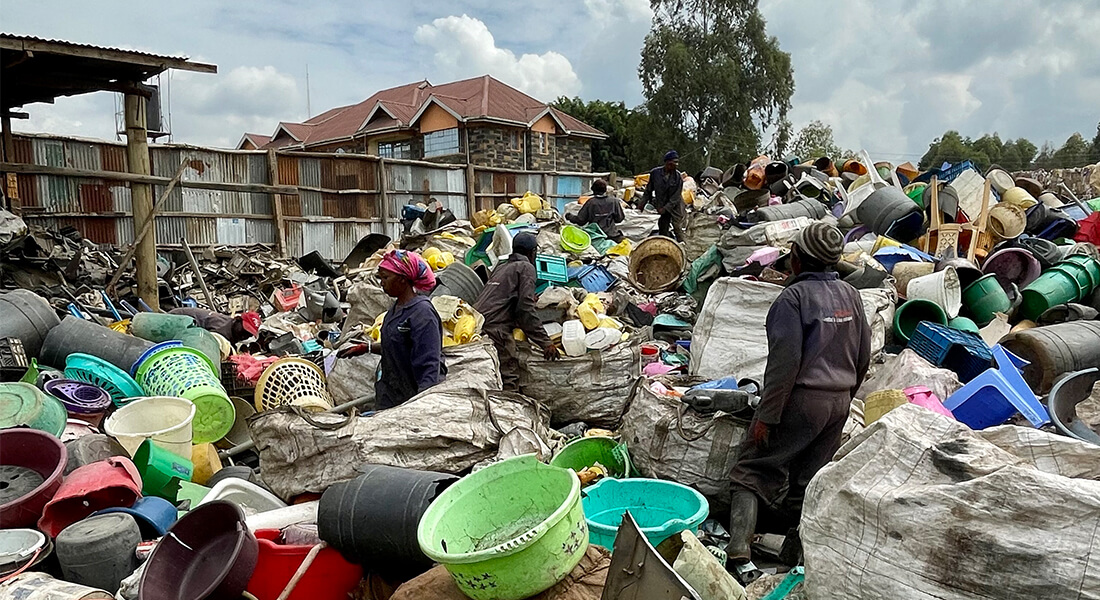
In Kenya, an estimated 37 kilotons of plastic waste leaks into the environment and ocean each year. Solid waste management is viewed as an urgent issue, especially in cities where waste accumulates in open dumpsites and waterways.
In response, the Kenyan government is moving quickly to adopt circular economy policies targeting the waste sector. These policies promise to fully formalize the hitherto largely informal solid waste sector. At the same time, what is actually happening on the ground – who is benefiting, who is losing, and who is being included and excluded – is poorly understood
Three cities
PlastiCITIES works across three Kenyan cities – Nairobi, Mombasa and Busia – where the research team expects waste work with plastic to be changing in different ways. Across these cities, plastic waste accumulates in different sites, is governed by different constellations of actors, and is handled by waste workers with different socio-economic characteristics. The team will map who waste workers are, where they are working, who they are working for, why they are doing this work and what their work involves.
The project is designed to build a body of ethnographic, survey and policy data documenting how waste workers’ lives are changing amid the push for a circular economy in post-consumer plastics. The research and analysis will provide a better grounding for policy discussions and advocacy efforts aimed at ensuring the inclusion of waste workers in the transition.