
‘Every archive is a different world’: an interview with José María Martín Humanes
José María Martín Humanes is a Marie Curie Fellow and a new colleague at the Centre for Privacy Studies which hosts his project: Subaltern Privacy: Echoes of the Resistance in the Hispanic World (SUBPRIVACY). The project examines privacy in early modern societies, with particular attention to subaltern contexts, ethno-religious minorities, and communities exposed to intensified regimes of moral, legal, and religious regulation.
José’s work relies heavily on archival materials which means he has spent a good part of the year visiting archives in Spain, Algeria, Mexico and the Philippines. Having recently returned to Copenhagen, we sit down with José to hear more about the SUBPRIVACY project and of his experiences in the archive.
Spanish version of the interview below
How did the SUBPRIVACY project evolve and take shape? Was it an idea you had been developing for a long time, or did it come to you more unexpectedly?
SUBPRIVACY was born in 2024 in Arahal, my hometown: a small olive-growing town in southern Spain with a beautiful Arabic name, ar-raḥal رَحْل, which refers to a crossroads. In retrospect, the image seems an apt metaphor for the project’s intellectual origins, because SUBPRIVACY emerged at the meeting point of different stages in my academic career.
The first was my training in Spain, shaped by the historiographical importance of the conquest of the Nasrid Kingdom of Granada and its political, cultural and religious consequences. The second was my engagement with the legal history in the Hispanic world at the Max Planck Institute in Frankfurt, under the supervision of Thomas Duve, where I specialized in canon law during the early modern period: a normative system as fascinating as it was invasive, reaching into people’s consciences, beliefs and intimate lives.
The third influence arrived in the most unexpected way. Through a call for papers for the edited volume Privacy at Sea, I discovered the Centre for Privacy Studies and the approach to studying privacy historically that Mette Birkedal Bruun and her team were developing in Copenhagen. Ideas that had until then remained disconnected in my mind began to form connections with one another.
Inspired, moreover, by Enrique Soria Mesa’s interpretation of the processes of integration and assimilation among Spanish Jewish converts, I realized that many of the religious minorities I had encountered in my earlier research had not merely been passive victims of surveillance and persecution. They had also exercised their own agency and learnt to navigate extraordinarily complex circumstances by strategically managing their exposure: concealing origins, identities and certain beliefs; controlling the circulation of information; interpreting social situations; and deciding what could be disclosed, to whom and under what circumstances. I discuss this change of perspective in greater detail in one of the project’s blog posts at https://subprivacy.com/. What had initially seemed to me a collection of disparate practices could be reconsidered, in the light of James C. Scott’s work, as a history of the production of privacy by subaltern groups.
SUBPRIVACY was not, therefore, a project that I had been consciously preparing for years. Its materials had accumulated throughout my career, but the question and perspective capable of connecting them and revealing the historical phenomenon they contained arrived unexpectedly from Denmark.
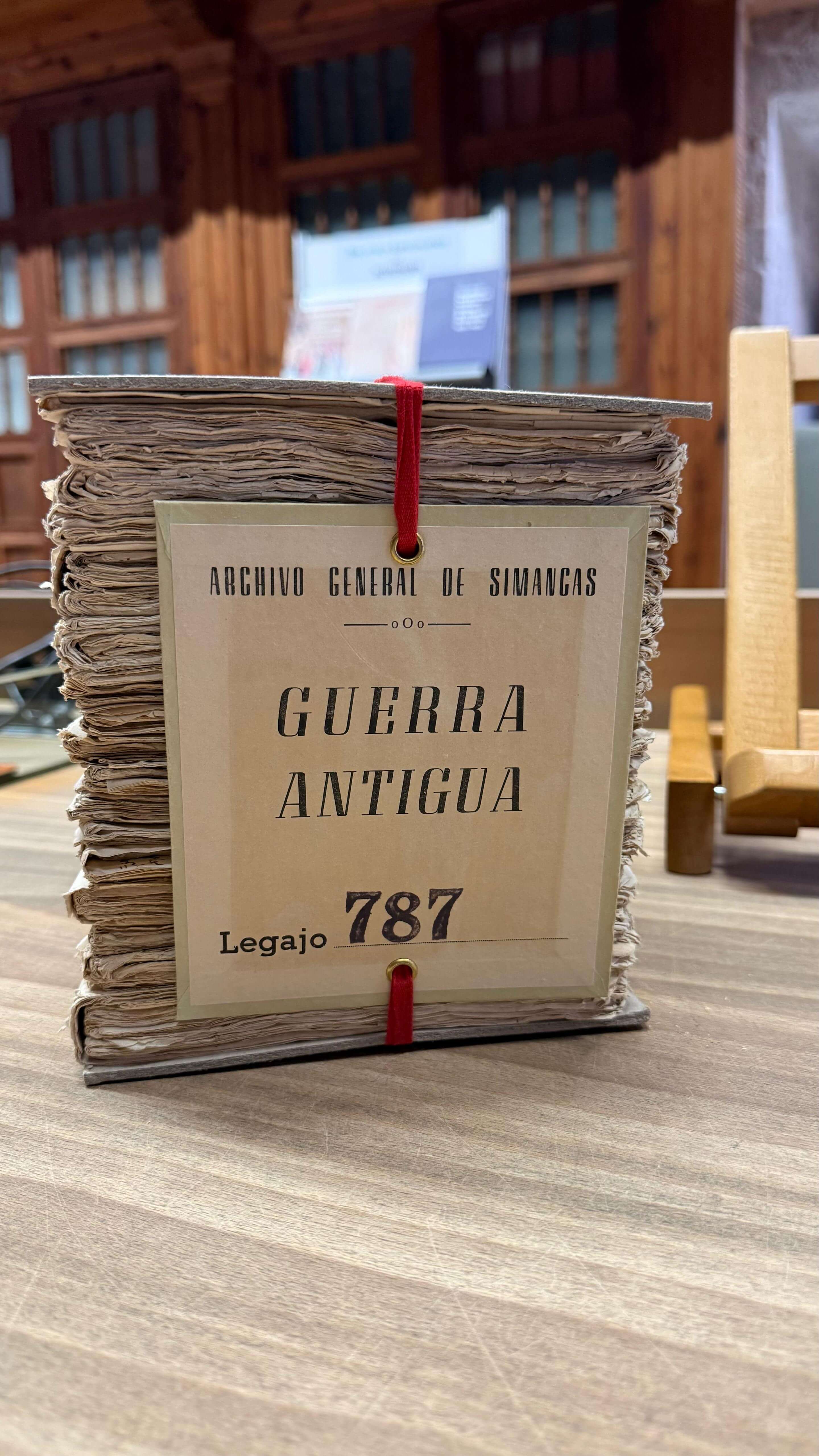
General Archive of Simancas. Valladolid, Spain.
Your previous work focused on the area around your native Seville. Now, beyond the case studies centered on Granada and Córdoba, you have also turned to territories such as Mexico, the Philippines and North Africa. How has this shift in focus affected your work, given that these places, while still part of the Hispanic world, offer very different contexts and settings?
The research stays in Mexico City, Oran and Manila have, of course, contributed very positively to my development as a researcher. They have not only broadened my geographical and cultural horizons but have also enabled me to build new academic networks, gain first-hand knowledge of research centres, archives and libraries, and engage with contemporary realities that differ greatly from one another.
A global perspective, for its part, has formed part of my research for several years. My engagement with Spanish colonial law, or Derecho Indiano, allowed me to move beyond strictly national frameworks and to think about the history of the Hispanic world through processes connecting very different territories across enormous distances. SUBPRIVACY has enabled me to take that approach into the field and observe how mobility, distance and the circulation of information shaped people’s actual lives.
That said, my interest does not lie in places for their own sake, but in the conditions they offered for managing exposure. This affected, first of all, the communities already living there, which had to adapt their privacy practices to a particular combination of institutional surveillance, social pressure, cultural diversity and the circulation of information. But it also affected those who needed to move from other territories of the empire because their own identities, family connections or ancestry could expose them to persecution, mechanisms of exclusion or different forms of social stigmatisation.
General Archive of Simancas. Valladolid, Spain.
A large city could provide anonymity; a port could facilitate movement; and a distant enclave in need of soldiers, merchants, officials or new settlers could offer opportunities to escape a compromised reputation and build a new one from scratch. Distance made it harder to verify origins, trace genealogies and reconstruct former lives. Moving elsewhere could mean changing the conditions under which a person was known.
Nor were these strategies exclusively individual. Communities learnt to adapt, transmitted knowledge, built networks of trust and developed shared forms of silence, dissimulation and protection. As people moved, this knowledge came into contact with other cultures and local experiences, changed and produced new responses. In SUBPRIVACY, therefore, space does not simply function as a backdrop. It forms part of the strategies through which people and communities managed exposure, risk and identity.
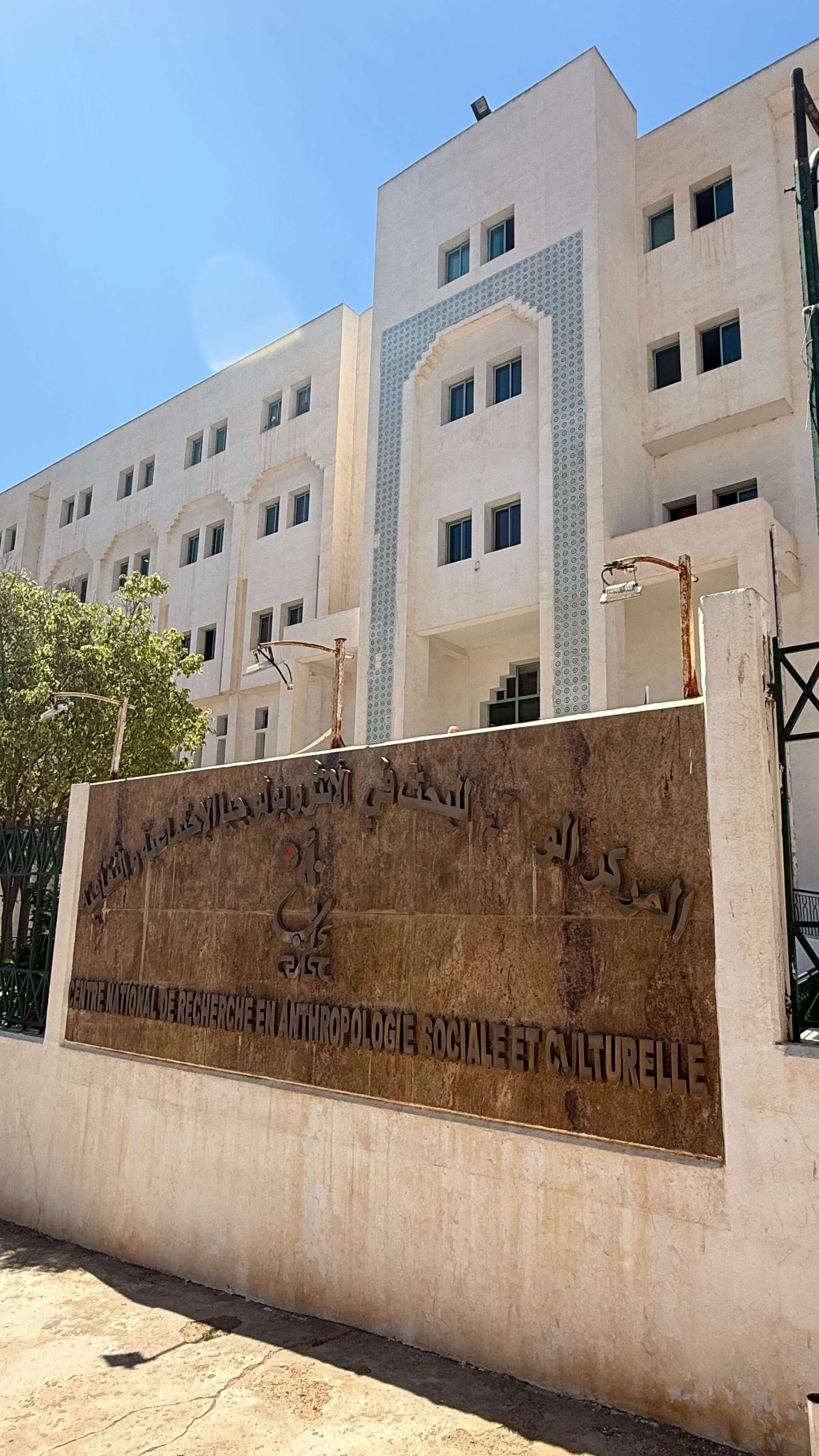
Centre for Research in Social and Cultural Anthropology (CRASC). Oran, Algeria
In your blog, you note that subaltern and persecuted groups can be difficult to study. Someone concealing an identity or withholding information will do their best to leave no trace. We are left either with archival material produced by their persecutors or with their own fragmented and perhaps intentionally misleading records. How do you reconstruct their histories without introducing too many assumptions and interpretations?
The main difficulty in studying these groups lies in the stereotypes we have inherited from historiography. Three are particularly persistent. The first, and perhaps the most common, reduces these communities to the status of victims, without recognizing their capacity to act, adapt and learn. The second holds that their desire to hide, combined with the loss or destruction of documents, rendered them virtually invisible and inaccessible to historians. The third equates silence with non-existence: if something was not explicitly recorded and cannot be seen in a source, it is assumed not to have happened and to offer us nothing of value.
Having been victims, however, does not mean that they lacked agency. Persecution profoundly shaped their lives, but it did not wholly determine their responses. These people observed how power operated, learned from earlier experiences, anticipated risks, transmitted knowledge and adapted their conduct to changing circumstances. Their agency did not necessarily take the form of open resistance or direct confrontation with institutions, but of everyday decisions about when to speak, what to show, whom to entrust with particular information or how to avoid a potentially dangerous situation. Recognizing these practices neither minimizes the violence they suffered nor romanticizes their responses; it allows us to understand that they, too, acted within the narrow room for manoeuvre left by persecution, racism and discrimination.
Similarly, to claim that these people left no traces attributes to them a degree of control over personal information that they did not, in fact, possess. They could decide what to say, destroy a letter or omit from a statement what they remembered about an aspect of their family history, but they could not control what their neighbours remembered, witnesses testified, institutions investigated or adversaries circulated. Wanting to leave no trace does not mean being able to control every trace that others produce about us. No one is completely invisible: people are more or less legible in the eyes of power.
These people were aware of that limit, and this is precisely where privacy practices come in. They could not disappear completely or control all the information circulating about them, but they could intervene to some extent in the conditions under which they could be known: selecting what they disclosed, keeping certain aspects of their background silent, modifying their behaviour or attempting to influence what others knew and said about them.
Silence is also a form of information. In a genealogy, for example, the omission of a grandfather condemned by the Inquisition can prove deeply revealing when his existence re-emerges decades later in a blood-purity enquiry through the statements of numerous witnesses. That silence does not in itself demonstrate why he was omitted, but it acquires meaning when compared with other sources and when its effects are observed over time.
The key, therefore, is not to fill silences with assumptions. I compare and cross-reference sources of very different kinds, carefully distinguishing between what I can demonstrate, what I can reasonably infer and what must remain a hypothesis. SUBPRIVACY does not seek a pure voice hidden in the archive, but the tensions between people attempting to manage their exposure and institutions determined to make them legible.
Tell us a little about your archival work. You spend long periods abroad in unfamiliar places and work under very different archival conditions. Has there been a particular challenge you have had to overcome? And have you found time to enjoy and explore the places you visit?
Every country is a different world, and so is every archive. This applies as much to Mexico City, Oran and Manila as it does to the ecclesiastical, public and private archives I have consulted in various Spanish cities. A research stay must be prepared academically — by locating collections, studying catalogues, requesting permission and establishing contacts — but it also requires learning how to navigate everyday life: understanding distances, transport, opening hours, working rhythms and local customs. All of this affects how much time you can ultimately devote to research.
In my case, the main difficulty has been undertaking these stays almost back-to-back. Travelling, in the space of barely five months, from Mexico City to various Spanish archives, and then to Oran and Manila, is physically very demanding and makes serious organisation essential. When you are working thousands of kilometres from home and know that you may not be able to return soon, you have to make the most of every day, record your findings carefully and be ready to follow leads you had not anticipated.
Moreover, however carefully you plan, circumstances beyond your control always arise. Military conflict in the Persian Gulf threatened air routes to Asia and forced me to change the order of the stays; shortly after I arrived in Mexico, the operation against ‘El Mencho’ -Narco- triggered a serious security crisis and the closure of public institutions for several days; and in Manila, Typhoon Inday disrupted the city’s normal life for approximately a week. The celebration of Eid al-Adha, or the Feast of Sacrifice, also kept the CRASC in Oran closed for several days. Such situations force you to reorganise your work as you go and remind you that research also depends on realities far removed from the archive.
Fortunately, I have also found time to enjoy myself, meet wonderful people and explore these places. I do not consider that experience to be entirely separate from the research. Walking their streets, getting to know their neighbourhoods, visiting museums, churches, markets and bookshops, sampling the food and talking to people offer access to cultural dimensions that rarely appear in documents.
The stays have been intense and, at times, exhausting, but they have also been one of the great privileges of SUBPRIVACY. They have allowed me to alternate the silence of the archives with the everyday life of culturally diverse societies, and to learn to find my bearings, almost simultaneously, in their documents and their cities.
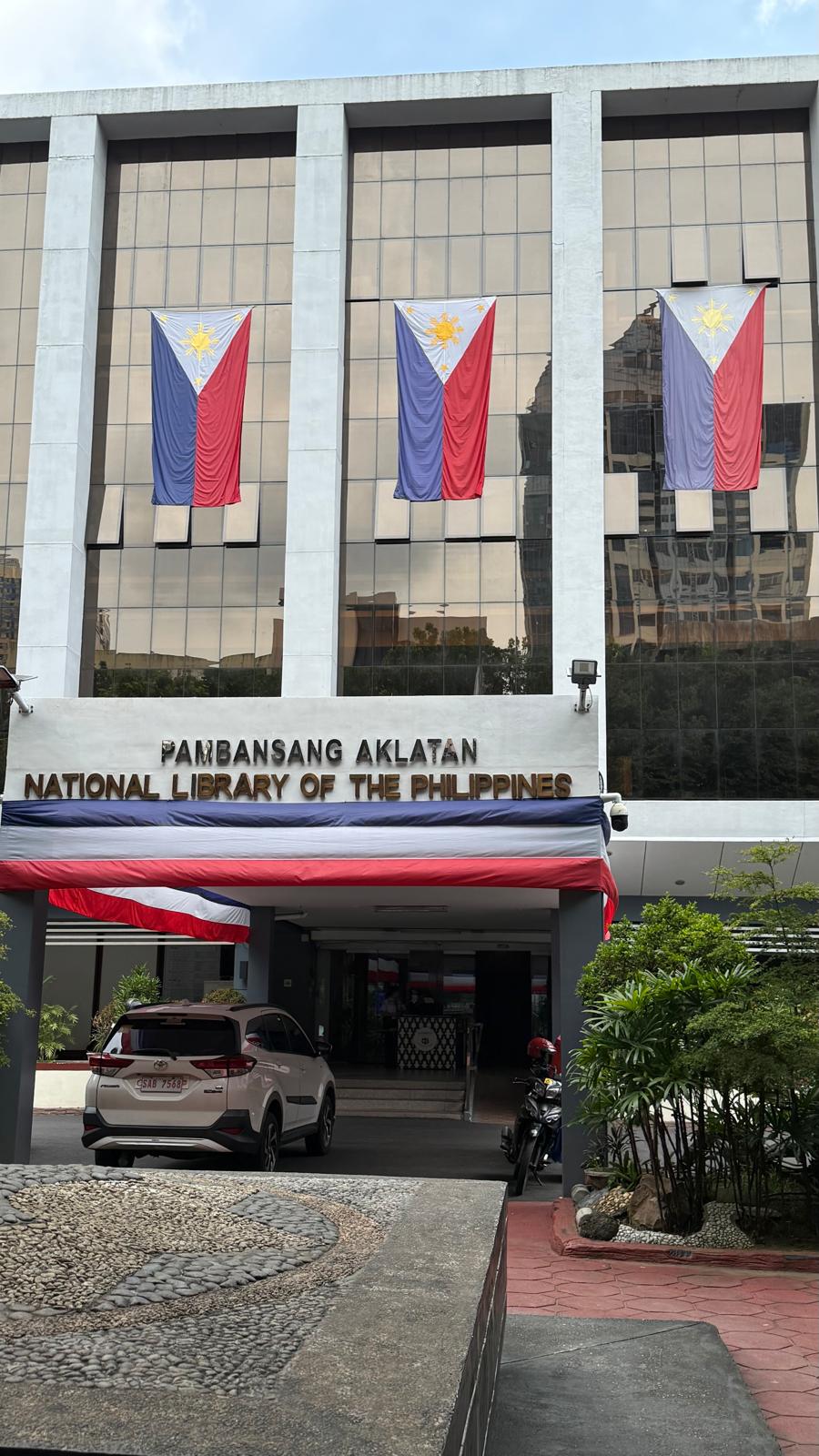
National Library of the Philippines. Manila, Philippines.
La entrevista se reproduce a continuación en castellano
Cada archivo es un mundo diferente
José María Martín Humanes es investigador Marie Curie y nuevo miembro del Centre for Privacy Studies, centro que acoge su proyecto: Subaltern Privacy: Echoes of the Resistance in the Hispanic World (SUBPRIVACY). El proyecto examina la privacidad en las sociedades de la Edad Moderna, prestando especial atención a los contextos subalternos, las minorías étnico-religiosas y las comunidades expuestas a regímenes intensificados de regulación moral, jurídica y religiosa.
El trabajo de José se basa en gran medida en documentación de archivo, por lo que ha pasado buena parte del año visitando archivos en España, Argelia, México y Filipinas. Tras su reciente regreso a Copenhague, conversamos con él para conocer más detalles sobre el proyecto SUBPRIVACY y sus experiencias en los archivos.
– Rigillo: ¿Cómo evolucionó y tomó forma el proyecto SUBPRIVACY? ¿Era una idea que llevabas madurando desde hacía mucho tiempo o surgió de una manera más inesperada?
SUBPRIVACY nació en 2024 en Arahal, mi localidad natal: un pequeño pueblo olivarero del sur de España con un precioso nombre árabe, ar-raḥal, que alude a un cruce de caminos. Visto retrospectivamente, esta imagen parece una metáfora de los orígenes intelectuales del proyecto, porque SUBPRIVACY surgió en el punto de encuentro de distintas etapas de mi trayectoria académica.
La primera fue mi formación en España, marcada por la importancia historiográfica de la conquista del reino nazarí de Granada y sus consecuencias políticas, culturales y religiosas. La segunda fue mi aproximación a la historia del derecho hispánico en el Instituto Max Planck de Frankfurt, bajo la dirección de Thomas Duve, donde me especialicé en derecho canónico durante la Edad Moderna: un sistema normativo tan fascinante como invasivo, que alcanzaba las conciencias, las creencias y la vida íntima de las personas.
La tercera influencia llegó de la manera más inesperada. A través de un Call for Papers para el volumen colectivo “Privacy at Sea”, descubrí el Centre for Privacy Studies y la propuesta para estudiar históricamente la privacidad que Mette Birkedal Bruun y su equipo estaban desarrollando en Copenhague. Algunas ideas que hasta entonces habían permanecido desconectadas en mi cabeza comenzaron entonces a tender puentes entre sí.
Inspirado, además, por la visión de Enrique Soria Mesa sobre los procesos de integración y asimilación de los judeoconversos españoles, comprendí que muchas de las minorías religiosas con las que me había encontrado en mis investigaciones anteriores no habían sido únicamente víctimas pasivas de la vigilancia y la persecución. También habían desplegado su propia capacidad de acción y aprendido a navegar escenarios extraordinariamente complejos, gestionando estratégicamente su exposición: ocultando orígenes, identidades y determinadas creencias; controlando la circulación de la información; interpretando las situaciones sociales, y decidiendo qué podía revelarse, ante quién y en qué circunstancias. Hablo con mayor detalle sobre este cambio de perspectiva en una de las entradas del blog del proyecto https://subprivacy.com/ . Lo que inicialmente me había parecido una colección de prácticas dispersas podía reconsiderarse, a la luz de la obra de James C. Scott, como una historia de la producción de privacidad por los grupos subalternos.
SUBPRIVACY no fue, por tanto, un proyecto que llevara años preparando conscientemente. Aquellas ideas y materiales habían ido acumulándose a lo largo de toda mi trayectoria, pero la pregunta y la perspectiva capaces de conectarlos, revelando el fenómeno histórico que contenían, llegaron de manera inesperada desde Dinamarca.
– Rigillo: Tus investigaciones anteriores se centraban en el entorno de tu Sevilla natal. Ahora, además de los casos de estudio de Granada y Córdoba, te has desplazado a territorios como México, Filipinas y el norte de África. ¿Cómo ha sido el cambio de enfoque hacia lugares que, aunque continúan formando parte del mundo hispánico, presentan contextos y escenarios muy diferentes?
Por supuesto, las estancias en Ciudad de México, Orán y Manila han supuesto un crecimiento muy positivo para mi trayectoria investigadora. No solo han ampliado mi horizonte geográfico y cultural, sino que también me han permitido tejer nuevas redes académicas, conocer de primera mano sus centros de investigación, archivos y bibliotecas, y aproximarme a unas realidades contemporáneas muy diferentes entre sí.
La perspectiva global, por su parte, forma parte de mis investigaciones desde hace ya algunos años. Mi aproximación al derecho indiano me permitió superar los marcos estrictamente nacionales y pensar la historia del mundo hispánico a través de procesos que conectaban territorios muy distintos, separados por enormes distancias. SUBPRIVACY me ha permitido, en primera persona, llevar ese enfoque al terreno y observar cómo la movilidad, la distancia y la circulación de información incidían en la vida concreta de las personas.
Dicho esto, mi interés no se centra en los lugares por sí mismos, sino en las condiciones que ofrecían para gestionar la exposición. Esto afectaba, en primer lugar, a las comunidades que ya vivían allí y que debían adaptar sus prácticas de privacidad a una determinada combinación de vigilancia institucional, presión social, diversidad cultural y circulación de información; pero también afectaba a quienes necesitaban desplazarse desde otros territorios del imperio porque su identidad, sus vínculos familiares o sus orígenes heredados podían exponerlos a la persecución, a mecanismos de exclusión o a distintas formas de estigmatización social.
Una gran ciudad podía proporcionar anonimato; un puerto, facilitar la circulación; y un enclave lejano, necesitado de soldados, comerciantes, funcionarios o nuevos pobladores, podía ofrecer oportunidades para escapar de una reputación comprometida y construir otra desde cero. La distancia dificultaba comprobar los orígenes, rastrear genealogías y reconstruir vidas anteriores. Cambiar de lugar podía significar cambiar las condiciones bajo las cuales una persona era conocida.
Estas estrategias tampoco eran exclusivamente individuales. Las comunidades aprendían a adaptarse, transmitían conocimientos, construían redes de confianza y desarrollaban formas compartidas de silencio, disimulo y protección. Al desplazarse, estos saberes entraban en contacto con otras culturas y experiencias locales, se transformaban y producían nuevas respuestas. Por eso, en SUBPRIVACY, el espacio no funciona simplemente como escenario. Forma parte de las estrategias mediante las cuales personas y comunidades gestionaban la exposición, el riesgo y la identidad.
– Rigillo: En tu blog señalas que los grupos subalternos y perseguidos pueden resultar difíciles de estudiar. Quien oculta una identidad o retiene información se esforzará precisamente por no dejar huellas. Solo nos queda, o bien la documentación de archivo producida por sus perseguidores, o bien sus propios registros fragmentarios y quizá intencionadamente engañosos. ¿Cómo consigues reconstruir sus historias sin introducir demasiadas suposiciones e interpretaciones?
La principal dificultad para estudiar a estos grupos reside en los estereotipos que hemos heredado de la historiografía. Hay tres especialmente persistentes. El primero, y quizá el más recurrente, reduce a estas comunidades a la condición de víctimas, sin reconocer sus capacidades de acción, adaptación y aprendizaje. El segundo sostiene que su voluntad de ocultarse, unida a la pérdida o destrucción de documentos, las convirtió en sujetos históricamente invisibles e inaccesibles. Y el tercero confunde el silencio con la inexistencia: si algo no quedó registrado de forma explícita y no podemos verlo en una fuente, se concluye que no ocurrió y que nada valioso podemos extraer de ello.
Haber sido víctimas, sin embargo, no significa que carecieran de agencia. La persecución condicionó profundamente sus vidas, pero no determinó por completo sus respuestas. Estas personas observaron el funcionamiento del poder, aprendieron de experiencias anteriores, anticiparon riesgos, transmitieron conocimientos y adaptaron su conducta a circunstancias cambiantes. Su capacidad de acción no se manifestó necesariamente mediante una resistencia abierta o un enfrentamiento directo con las instituciones, sino a través de decisiones cotidianas sobre cuándo hablar, qué mostrar, a quién confiar determinada información o cómo evitar una situación potencialmente peligrosa. Reconocer estas prácticas no minimiza la violencia que sufrieron ni romantiza sus respuestas; permite comprender que también actuaron dentro de los estrechos márgenes que la persecución, el racismo y la discriminación dejaban disponibles.
De igual modo, afirmar que estas personas no dejaban rastros les atribuye una capacidad de control sobre la información personal que, en realidad, no poseían. Podían decidir qué decir, destruir una carta u omitir en una declaración lo que recordaban sobre un antecedente familiar, pero no podían controlar lo que recordaban sus vecinos, declaraban los testigos, investigaban las instituciones o difundían sus adversarios. Querer no dejar huellas no significa poder controlar todas las huellas que otros producen sobre nosotros. No hay personas completamente invisibles: hay personas más o menos legibles a ojos del poder.
Estas personas eran conscientes de ese límite, y es ahí donde entran precisamente las prácticas de privacidad. No podían desaparecer por completo ni controlar toda la información que circulaba sobre ellas, pero sí intervenir parcialmente en las condiciones bajo las cuales podían ser conocidas: seleccionando lo que revelaban, silenciando determinados antecedentes, modificando su comportamiento o tratando de influir en lo que otros sabían y decían sobre ellas.
El silencio es también una forma de información. En una genealogía, por ejemplo, la omisión de un abuelo condenado por la Inquisición puede resultar profundamente reveladora cuando su existencia reaparece décadas después en un expediente de limpieza de sangre a través de las declaraciones de numerosos testigos. Ese silencio no demuestra por sí mismo por qué fue omitido, pero adquiere significado al compararlo con otras fuentes y observar sus efectos a lo largo del tiempo.
La clave no consiste, por tanto, en rellenar los silencios mediante suposiciones. Comparo y cruzo fuentes de naturaleza muy diferente y distingo cuidadosamente entre lo que puedo demostrar, lo que puedo inferir razonablemente y lo que debe permanecer como hipótesis. SUBPRIVACY no busca una voz pura escondida en el archivo, sino las tensiones entre personas que intentaban gestionar su exposición y unas instituciones empeñadas en hacerlas legibles.
– Rigillo: Háblanos un poco de tu trabajo en los archivos. Pasas largos periodos en países desconocidos y te enfrentas a condiciones archivísticas muy diferentes. ¿Ha habido algún desafío particular que hayas tenido que superar? ¿Y has encontrado tiempo para disfrutar y explorar los lugares que visitas?
Cada país es un mundo diferente y cada archivo también. Esto se aplica tanto a Ciudad de México, Orán y Manila como a los archivos eclesiásticos, públicos y privados que he consultado en distintas ciudades españolas. Una estancia debe prepararse académicamente —localizar fondos, estudiar catálogos, solicitar permisos y establecer contactos—, pero también exige aprender a desenvolverse en la vida cotidiana: conocer las distancias, el transporte, los horarios, los ritmos de trabajo y las costumbres de cada lugar; donde se puede ir y donde no, ya sea por la inversión de tiempo que requiere o por simples motivos de seguridad. Todo ello condiciona el tiempo que finalmente puedes dedicar a investigar.
En mi caso, la principal dificultad ha sido realizar estas estancias prácticamente una detrás de otra. Pasar, en apenas cinco meses, de Ciudad de México a distintos archivos españoles, y después a Orán y Manila, resulta físicamente muy exigente y obliga a tomarse la organización muy en serio. Cuando trabajas a miles de kilómetros y sabes que quizá no puedas regresar pronto, debes aprovechar cada jornada, registrar cuidadosamente los hallazgos y estar preparado para seguir pistas que no habías previsto.
Además, por mucho que planifiques, siempre aparecen circunstancias imposibles de controlar. El pasado conflicto bélico en el Golfo Pérsico amenazó las rutas aéreas hacia Asia y me obligó a cambiar el orden de las estancias; poco después de mi llegada a México, el operativo contra “el Mencho” provocó una grave crisis de seguridad y el cierre de organismos públicos durante varios días; y en Manila el tifón Inday alteró durante aproximadamente una semana el funcionamiento habitual de la ciudad. De igual modo, la celebración del Eid al-Adha, (la popular Fiesta del Cordero), también mantuvo cerrado el CRASC de Orán (Centre de Recherche en Anthropologie Sociale et Culturelle) durante varias jornadas. Estas situaciones te obligan a reorganizar el trabajo sobre la marcha y recuerdan que la investigación también depende de realidades muy alejadas del archivo.
Afortunadamente, también he encontrado tiempo para disfrutar, conocer a personas maravillosas y explorar estos lugares. No considero que esa experiencia esté completamente separada de la investigación. Caminar por sus calles, conocer los barrios, visitar museos, iglesias, mercados y librerías, probar la gastronomía y conversar con la gente permite aproximarse a dimensiones culturales que difícilmente aparecen en los documentos.
Las estancias han sido intensas y, en ocasiones, agotadoras, pero también uno de los grandes privilegios de SUBPRIVACY. Me han permitido alternar el silencio de los archivos con la vida cotidiana de sociedades culturalmente muy diversas y aprender a orientarme, casi al mismo tiempo, en sus documentos y en sus ciudades.