
SKC Annual Conference 2026
Kierkegaard – and Kierkegaard: Totality and Plurality
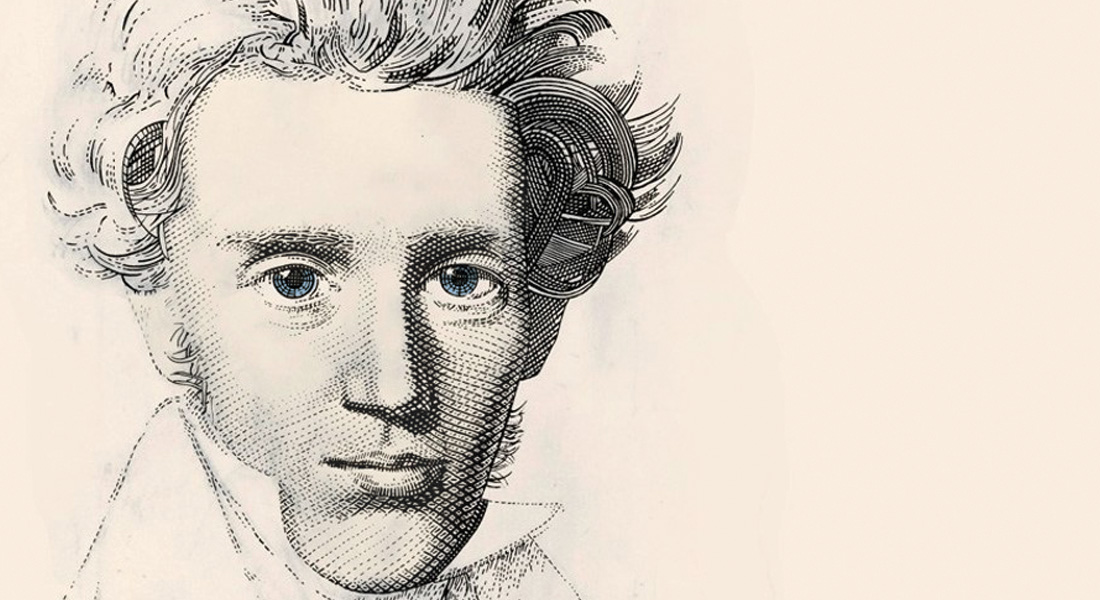
In the second issue of The Moment, from the summer of 1855, Kierkegaard announces, “No, my dear reader, I’m not going coddle; if you imagine that I am a personal servant, then you have never been my reader.” Kierkegaard was a demanding author who imagined his reader as someone who understood his published writings as a “totality” with a dynamic that went through it from the first work to the last. Complying with this demand, however, is bound up with certain difficulties. First of all, Kierkegaard’s writings present a considerable plurality which can be seen not only in the difference between the pseudonymous and the edifying works, but is also attested to by often totally differing themes, strongly divergent textuality, and unabashed plurality of voices. Thus, the ideal of a totality appears to be threatened by the factual plurality of the writings. Secondly, Kierkegaard’s writings make it very clear that, over time and over the course of his writing, their author alters his position with respect to a long series of subjects – for example, woman, the (in)commensurability of inwardness, and his task as an author – just as he continually reconsiders his position with respect to such figures as Luther, Mynster, and his own earthly-all-too-earthly father. Once again, the plurality threatens the unity – something Kierkegaard least of all desired. As he wrote with biting irony in late September 1855: “Be a nitwit, have one view today, another tomorrow, then once again the one you had yesterday, and then, yet again, a new one on Friday; be a nitwit, make yourself into multiple persons, parcel yourself out: have one view anonymously and another under your name . . . and you shall see: all difficulties disappear . . . .”
The intricate relationship between the individual writing and the opus interpreted as a totality reactualizes the classic discussion about the real Kierkegaard. Or, to put it another way: To whom, to what, and to which texts does one refer when one refers to Kierkegaard as the guarantor of the correctness of one’s interpretation? The hermeneutical implications of these reflections do not remain shyly in the background – to what extent can – or ought – Kierkegaard’s notion of “totality” have an influence on the interpretation of an individual work? And is Kierkegaard the best interpreter of Kierkegaard? If not: How is the work – including Kierkegaard’s own interpretation of that work – to be interpreted? How can the authorship both have its “dear reader” as addressee and be Kierkegaard’s own “upbringing and development,” as is maintained in The Point of View? What is the relation between the published writings and the journals? And between the author Kierkegaard and the Copenhagen citizen of the same name? Are they both part of the authorship – and, all things considered, how is an authorship defined? What course of development – theologically, philosophically, ideologically, rhetorically, biographically, etc. – takes place within the authorship, and by what other situations and factors are they conditioned? And which concerns and themes continue unchanged through authorship? Is it possible to isolate Kierkegaard’s implicit reader and connect such a reader with Kierkegaard’s explicit reader in the year 2026? Is a secular reading of Kierkegaard a promising rebirth of Kierkegaard on terms of later-modernity, or is it merely arbitrary cherry-picking? Are we to protect Kierkegaard – including against Kierkegaard himself and especially against the late Kierkegaard? When, in brief, is Kierkegaard Kierkegaard – and Kierkegaard?